
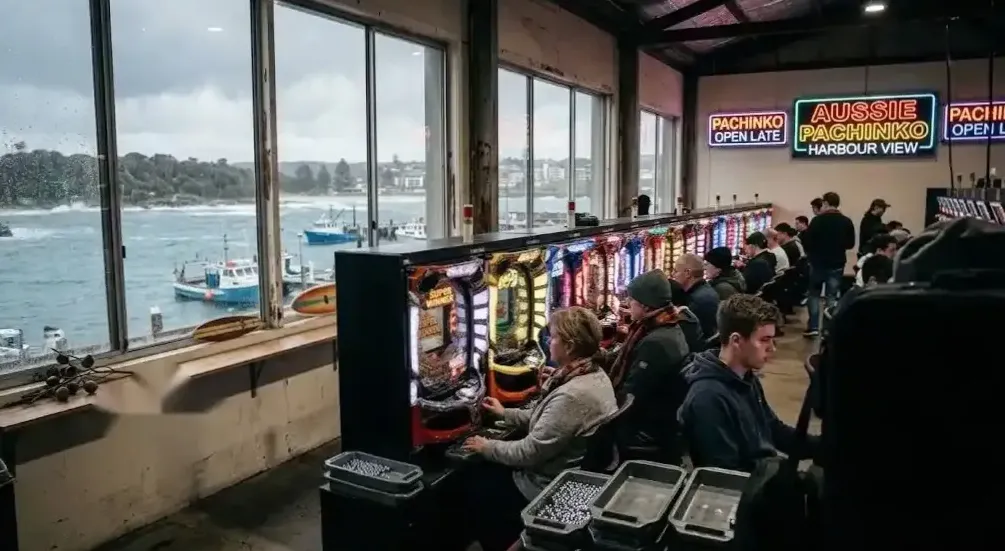
The anatomy of a machine
Stand in front of a machine for the first time and it looks like chaos — hundreds of tiny steel balls ricocheting off brass nails while a video screen fires animations. Look closer and there's a strict order to it. Your dial controls a launch rail that feeds balls into a vertical field at the top of the machine, and gravity takes it from there.
The field itself is the heart of the thing. Hundreds of nails are arranged in patterns that look decorative but are actually precise funnels — each cluster directs balls toward or away from the centre pockets. A ball that lands in the right pocket triggers a spin on the digital reels; matching symbols release a payout of more balls, which you keep.
The screen is decoration with a purpose — it shows your spin animations, jackpot sequences and machine state. Veterans glance at it for information; beginners stare at it like a television. Understanding that the screen merely reports what the physics already decided is the first real lesson.
Once you see the nails instead of the lights, you can never watch a machine the same way again.
Why the nails matter
Here's what most players never learn: the nail layout is the machine's personality. A technician can tighten or open the gap between nails by fractions of a millimetre, and that adjustment changes how generously the machine feeds its pockets. Two identical-looking machines can play completely differently because of adjustments you'd need a magnifying glass to see.
This is why experienced players walk the floor slowly, watching how machines are feeding before they sit. They're not being superstitious — they're reading the field. Our own technicians tune the tournament row to identical specs on event days, and the tuning sheet is posted at the stage for anyone who wants to see it.

Payout cycles explained
Modern machines run regulated probability cycles — the machine's brain tracks its payout state and moves through phases you can learn to feel. A machine in a generous phase will hit pockets more often; a tight phase can run cold for an hour. Neither is rigged; it's the mathematics of variance playing out in real time.
The dial is your only input, but it's a real input. Small wrist adjustments change the launch strength, which changes where balls enter the field, which changes which nail funnels they pass. It's a subtle skill — the difference between random rain and aimed drizzle — and it's why the masterclass spends twenty minutes on it.
Put it together and pachinko is a game of informed rhythm: choose a machine feeding well, dial in your entry point, and ride the cycles with discipline. The lights and noise are theatre. Underneath is a machine that respects people who take the time to understand it.
Key takeaways
- The nail layout is the machine's personality — learn to read it
- The screen reports what physics already decided
- Dial control is a genuine skill, not superstition
- Payout phases are variance, not patterns to chase
Related reading at the club
Written by
Kenji Watanabe
Platinum member and volunteer tournament marshal